接第二篇:
Diversity analysis
All samples shall be homogenized according to the minimum sequence number. OTU with 97% similarity shall be selected, and Mothur method shall be used (http://www.mothur.org/wiki/). Calculate the Ace index, Shannon index, Simpson index, Chao index, and Coverage index of each group. In this study, the sclerotium and mycoderm samples in the stage of sclerotia, sterile cultivation, and mulching cultivation in the stage of mycoderm formation and maturity were divided into nine groups of samples, with three replicates in each group. The average diversity index of each group was calculated by SPSS software, and the significant differences between the groups were compared by one-way analysis of variance (ANOVA). Using the unweighted group average method to cluster and calculate the beta diversity index of different samples, principal coordinate analysis (PCoA) was conducted to clarify the distance matrix between different groups.
Analysis of bacterial community structure
Use the R language tool to make a percentage stacking column chart for the bacterial groups whose relative abundance is greater than 1.0% in each group of samples. If the relative abundance is less than 1.0%, it should be attributed to others (the relative abundance is the average of three repeats of each group of samples). The common OTU and unique OTU of C. chanhua samples in different stages under the same environment and in different cultivation environments at the same stage were analyzed by Venn diagram, and the similarity and overlap of species composition of each sample were analyzed. The petal map was drawn for all C. chanhua samples, and the common and endemic genera in each sample were analyzed; based on the bacterial community abundance data in the samples, the significant differences between groups of the top 15 genera of bacterial community abundance in different samples were analyzed using one-way ANOVA, and significant species of differences between sample groups were obtained.
Bacterial function prediction
Via PICRUSt (http://picrust.github.io/picrust/), the 16S series of bacteria were annotated with Clusters of Orthologous Groups of proteins (COG) and Kyoto Encyclopedia of Genes and Genomes (KEGG) functions to obtain the annotation information of OTU at each functional level of COG and KEGG and its abundance in different samples.
Data analysis
Other test data were collated by Excel and statistically analyzed by SPSS software.
ACKNOWLEDGMENTS
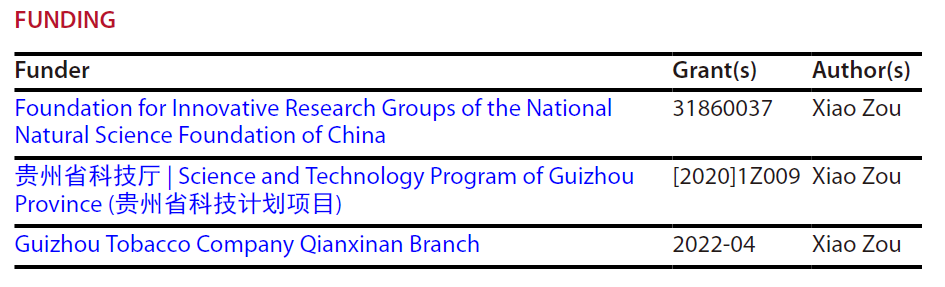
This work was supported by grants from the National Natural Science Foundation of China (no. 31860037), Department of Science and Technology of Guizhou Province (no. [2020]1Z009), and Guizhou Qianxinan Tobacco Company (no. 2022-04).
AUTHOR AFFILIATIONS
1Institute of Fungal Resources, College of Life Sciences, Guizhou University, Guiyang, Guizhou, China
2Department of Humanities, Business College of Guizhou University of Finance and Economics, Qiannan, Guizhou, China
3Tea College, Guizhou University, Guiyang, Guizhou, China
AUTHOR ORCIDs
Gongping Hu http://orcid.org/0009-0000-9356-2683
Xiao Zou http://orcid.org/0000-0002-3666-5536
AUTHOR CONTRIBUTIONS
Gongping Hu, Writing – original draft.
DATA AVAILABILITY
The raw sequence data have been deposited in the SRA database under accession number PRJNA944443.
ADDITIONAL FILES
The following material is available online.
Supplemental Material
Supplemental material (Spectrum01179-23-s0001.docx). Fig. S1 to Fig. S9; Tables S1 to S3.
Open Peer Review
PEER REVIEW HISTORY (review-history.pdf). An accounting of the reviewer comments and feedback.
REFERENCES
1. Huang A, Wu T, Wu X, Zhang B, Shen Y, Wang S, Song W, Ruan H. 2021. Analysis of internal and external microorganism community of wild cicada flowers and identification of the predominant Cordyceps cicadae fungus. Front Microbiol 12:752791. https://doi.org/10.3389/fmicb.2021. 752791
2. He YQ, Zhang WC, Peng F, Lu RL, Zhou H, Bao GH, Wang B, Huang B, Li ZZ, Hu FL. 2019. Metabolomic variation in wild and cultured cordyceps and mycelia of Isaria cicadae. Biomed Chromatogr 33. https://doi.org/10. 1002/bmc.4478
3. Zeng ZY, Mou D, Luo L, Zhong WL, Duan L, Zou X. 2021. Differen t cultivation environments affect the yield, bacterial community and metabolites of Cordyceps cicadae. Front Microbiol 12:669785. https://doi. org/10.3389/fmicb.2021.669785
4. Li SP, Yang FQ, Tsim KWK. 2006. Quality control of Cordyceps sinensis, a valued traditional Chinese medicine. J Pharm Biomed Anal 41:1571–1584. https://doi.org/10.1016/j.jpba.2006.01.046
5. Sung GH, Hywel-Jones NL, Sung JM, Luangsa-Ard JJ, Shrestha B, Spatafora JW. 2007. Phylogenetic classification of Cordyceps and the Clavicipitaceous fungi. Stud Mycol 57:5–59. https://doi.org/10.3114/sim. 2007.57.01
6. Li ZZ, Luan FG, Nigel HJ, Zhang SL, Chen MJ, Huang B, Shun CS, Chen ZA, Li CR, Tan YJ, Dong JF. 2021. Biodiversity of cordycipitoid fungi associated with Isaria cicadae Miquel Ⅱ: teleomorph discovery and nomenclature of chanhua, animportant medicinal fungus in China. Mycosystema 40:1–12. https://doi.%20org/10.13346/j. mycosystema. 200119
7. Zeng W-B, Yu H, Ge F, Yang J-Y, Chen Z-H, Wang Y-B, Dai Y-D, Adams A. 2014. Distribution of nucleosides in populations of Cordyceps cicadae. Molecules 19:6123–6141. https://doi.org/10.3390/molecules19056123
8. Ke B-J, Lee C-L. 2019. Using submerged fermentation to fast increase N6-(2-hydroxyethyl)-adenosine, adenosine and polysaccharide productions of Cordyceps cicadae NTTU 868. AMB Express 9:198. https://doi.org/10.1186/s13568-019-0892-4
9. Liu KB, Wang F, Liu GJ, Dong CH. 2019. Effect of environmental conditions on Synnema formation and nucleoside production in cicada flower, Isaria cicadae (Ascomycetes). Int J Med Mushrooms 21:59–69. 10. 1615/IntJMedMushrooms.2018029506
10. Sharma SK, Gautam N, Atri NS. 2015. Optimized extraction, composition, antioxidant and antimicrobial activities of exo and intracellular polysaccharides from submerged culture of Cordyceps cicadae. BMC Complement Altern Med 15:446. https://doi.org/10.1186/s12906-015-0967-y
11. Shi C, Song W, Gao J, Yan S, Guo C, Zhang T. 2022. Enhanced production of cordycepic acid from Cordyceps cicadae isolated from a wild environment. Braz J Microbiol 53:673–688. https://doi.org/10.1007/s42770-022-00687-4
12. Xu Z, Yan X, Song Z, Li W, Zhao W, Ma H, Du J, Li S, Zhang D. 2018. Two heteropolysaccharides from Isaria cicadae Miquel differ in composition and potentially immunomodulatory activity. Int J Biol Macromol 117:610–616. https://doi.org/10.1016/j.ijbiomac.2018.05.164
13. Huang YS, Wang X, Feng Z, Cui H, Zhu Z, Xia C, Han X, Liu WJ, Liu YN. 2020. Cordyceps cicadae prevents renal tubular epithelial cell apoptosis by regulating the SIRT1/p53 pathway in hypertensive renal injury. Evid Based Complement Alternat Med 2020:7202519. https://doi.org/10. 1155/2020/7202519
14. Deng J-S, Jiang W-P, Chen C-C, Lee L-Y, Li P-Y, Huang W-C, Liao J-C, Chen H-Y, Huang S-S, Huang G-J. 2020. Cordyceps cicadae Mycelia ameliorate cisplatin-induced acute kidney injury by suppressing the TLR4/NF-κB/MAPK and activating the HO-1/Nrf2 and Sirt-1/AMPK pathways in mice. Oxid Med Cell Longev 2020:7912763. https://doi.org/10.1155/2020/ 7912763
15. Zhu YL, Yu XF, Ge Q, Li J, Wang DJ, Wei Y, Ouyang Z. 2020. Antioxidant and anti-aging activities of polysaccharides from Cordyceps cicadae. Int J Biol Macromol 157:394–400. https://doi.org/10.1016/j.ijbiomac.2020.04. 163
16. Tsai Y-S, Hsu J-H, Lin DP-C, Chang H-H, Chang W-J, Chen Y-L, Chen C-C. 2021. Safety assessment of HEA-enriched Cordyceps cicadae mycelium: a randomized clinical trial. J Am Coll Nutr 40:127–132. https://doi.org/10. 1080/07315724.2020.1743211
17. Zhang QP, Olatunji OJ, Chen HX, Tola AJ, Oluwaniyi OO. 2018. Evaluation of the anti-diabetic activity of polysaccharide from Cordyceps cicadae in experimental diabetic rats. Chem Biodivers 15:e1800219. https://doi.org/ 10.1002/cbdv.201800219
18. Xu HH, Hao ZP, Wang LF, Li SJ, Guo YR, Dang XL. 2020. Suppression of transferrin expression enhances the susceptibility of Plutella xylostella to Isaria cicadae. Insects 11:281. https://doi.org/10.3390/insects11050281
19. Li SS, Hao ZP, Xu HH, Gao Y, Zhang MY, Liang J, Dang XL. 2022. Silencing β-1,3-glucan binding protein enhances the susceptibility of Plutella xylostella to entomopathogenic fungus Isaria cicadae. Pest Manag Sci 78:3117–3127. https://doi.org/10.1002/ps.6938
20. Zhang X, Hu Q, Weng Q. 2018. Secondary metabolites (SMs) of Isaria cicadae and Isaria tenuipes. RSC Adv 9:172–184. https://doi.org/10.1039/c8ra09039d
21. Zou X, Sun J, Li J, Jia Y, Xiao T, Meng F, Wang M, Ning Z. 2020. High flocculation of coal washing wastewater using a novel bioflocculan t from Isaria cicadae GZU6722. Pol J Microbiol 69:1–10. https://doi.org/10. 33073/pjm-2020-008
22. Nxumalo W, Elateeq AA, Sun Y. 2020. Can Cordyceps cicadae be used as an alternative to Cordyceps militaris and Cordyceps sinensis?—a review. J Ethnopharmacol 257:112879. https://doi.org/10.1016/j.jep.2020.112879
23. Li CR, Wang YQ, Cheng WM, Chen ZA, Hywel-Jones N, Li ZZ. 2021. Review on research progress and prospects of cicada flower, Isaria cicadae (Ascomycetes). Int J Med Mushrooms 23:81–91. https://doi.org/ 10.1615/IntJMedMushrooms.2021038085
24. Zhou XW, Gong ZH, Su Y, Lin J, Tang KX. 2009. Cordyceps fungi: natural products, pharmacological functions and developmental products. J Pharm Pharmacol 61:279–291. https://doi.org/10.1211/jpp/61.03.0002
25. Xia F, Zhou X, Liu Y, Li Y, Bai X, Zhou X. 2019. Composition and predictive functional analysis of bacterial communities inhabiting Chinese Cordyceps insight into conserved core microbiome. BMC Microbiol 19:105. https://doi.org/10.1186/s12866-019-1472-0
26. Shrestha B, Sung J-M. 2005. Notes on Cordyceps species collected from the central region of Nepal. Mycobiology 33:235–239. https://doi.org/10. 4489/MYCO.2005.33.4.235
27. Liu YG, Shi M, Liu XS, Xie JY, Yang RH, Ma QW, Guo LX. 2021. Arsenic transfer along the soil-sclerotium-stroma chain in Chinese Cordyceps and the related health risk assessment. PeerJ 9:e11023. https://doi.org/10. 7717/peerj.11023
28. Chunyu Y-J, Lu Z-M, Luo Z-S, Li S-S, Li H, Geng Y, Xu H-Y, Xu Z-H, Shi J-S. 2019. Promotion of metabolite synthesis in Isaria cicadae, a dominant species in the cicada flower microbiota, by cicada pupae. J Agric Food Chem 67:8476–8484. https://doi.org/10.1021/acs.jafc.9b02705
29. Zhang XM, Tang DX, Li QQ, Wang YB, Xu ZH, Li WJ, Yu H. 2021. Complex microbial communities inhabiting natural Cordyceps militaris and the habitat soil and their predicted functions. Antonie Van Leeuwenhoek 114:465–477. https://doi.org/10.1007/s10482-021-01534-6
30. Xia F, Liu Y, Guo M-Y, Shen G-R, Lin J, Zhou X-W. 2016. Pyrosequencing analysis revealed complex endogenetic microorganism community from natural DongChong XiaCao and its microhabitat. BMC Microbiol 16:196. https://doi.org/10.1186/s12866-016-0813-5
31. Nagy N. 2022. Capillary bridges on hydrophobic surfaces: analytical contact angle determination. Langmuir 38:6201–6208. https://doi.org/ 10.1021/acs.langmuir.2c00674
32. Chau HW, Si BC, Goh YK, Vujanovic V. 2009. A novel method for identifying hydrophobicity on fungal surfaces. Mycol Res 113:1046–1052. https://doi.org/10.1016/j.mycres.2009.06.007
33. Popovici J, White CP, Hoelle J, Kinkle BK, Lytle DA. 2014. Characterization of the cell surface properties of drinking water pathogens by microbial adhesion to hydrocarbon and electrophoretic mobility measurements. Colloids Surf B Biointerfaces 118:126–132. https://doi.org/10.1016/j. colsurfb.2014.03.033
34. Gannon JT, Manilal VB, Alexander M. 1991. Relationship between cell surface properties and transport of bacteria through soil. Appl Environ Microbiol 57:190–193. https://doi.org/10.1128/aem.57.1.190-193.1991
35. Talbot NJ. 1999. Fungal biology. Coming up for air and sporulation. Nature 398:295–296. https://doi.org/10.1038/18575
36. Wösten HA. 2001. Hydrophobins: multipurpose proteins. Annu Rev Microbiol 55:625–646. https://doi.org/10.1146/annurev.micro.55.1.625
37. Siqueira V, Lima N. 2012. Surface hydrophobicity of culture and water biofilm of Penicillium spp. Curr Microbiol 64:93–99. https://doi.org/10. 1007/s00284-011-0037-8
38. Zhang S, Xia YX, Kim B, Keyhani NO. 2011. Two hydrophobins are involved in fungal spore coat rodlet layer assembly and each play distinct roles in surface interactions, development and pathogenesis in the entomopathogenic fungus, Beauveria bassiana. Mol Microbiol 80:811–826. https://doi.org/10.1111/j.1365-2958.2011.07613.x
39. Sevim A, Donzelli BGG, Wu D, Demirbag Z, Gibson DM, Turgeon BG. 2012. Hydrophobin genes of the entomopathogenic fungus, Metarhizium brunneum, are differentially expressed and corresponding mutants are decreased in virulence. Curr Genet 58:79–92. https://doi. org/10.1007/s00294-012-0366-6
40. Li MM, Meng Q, Zhang H, Ni RY, Zhou GL, Zhao YN, Wu PP, Shu RH, Qin QL, Zhang JH. 2020. Vegetative development and host immune interaction of Ophiocordyceps sinensis within the hemocoel of the ghost moth larva, Thitarodes xiaojinensis. J Invertebr Pathol 170:107331. https:/ /doi.org/10.1016/j.jip.2020.107331
41. Vangalis V, Knop M, Typas MA, Papaioannou IA. 2021. Establishment of conidial fusion in the asexual fungus Verticillium dahliae as a useful system for the study of non-sexual genetic interactions. Curr Genet 67:471–485. https://doi.org/10.1007/s00294-021-01157-4
42. Nieuwenhuis BPS, James TY. 2016. The frequency of sex in fungi. Philos Trans R Soc Lond B Biol Sci 371:20150540. https://doi.org/10.1098/rstb. 2015.0540
43. Barton NH. 2009. Why sex and recombination?Cold Spring Harb Symp Quant Biol 74:187–195. https://doi.org/10.1101/sqb.2009.74.030
44. Wang Y, Glukhov E, He Y, Liu Y, Zhou L, Ma X, Hu X, Hong P, Gerwick WH, Zhang Y. 2022. Secondary metabolite variation and bioactivities of two marine Aspergillus strains in static co-culture investigated by molecular network analysis and multiple database mining based on LC-PDA-MS/MS. Antibiotics (Basel) 11:513. https://doi.org/10.3390/antibiotics11040513
45. Bergé J-P, Barnathan G. 2005. Fatty acids from lipids of marine organisms: molecular biodiversity, roles as biomarkers, biologically active compounds, and economical aspects. Adv Biochem Eng Biotechnol 96:49–125. https://doi.org/10.1007/b135782
46. Bao J, Wang J, Zhang X-Y, Nong X-H, Qi S-H. 2017. New furanone derivatives and alkaloids from the co-culture of marine-derived fungi Aspergillus sclerotiorum and Penicillium citrinum. Chem Biodivers 14. https://doi.org/10.1002/cbdv.201600327
47. Arora D, Chashoo G, Singamaneni V, Sharma N, Gupta P, Jaglan S. 2018. Bacillus amyloliquefaciens induces production of a novel blennolide K in coculture of Setophoma terrestris. J Appl Microbiol 124:730–739. https://doi.org/10.1111/jam.13683
48. Qu QS, Yang F, Zhao CY, Shi XY. 2019. Analysis of the bacteria community in wild Cordyceps cicadae and its influence on the production of HEA and nucleosides in Cordyceps cicadae. J Appl Microbiol 127:1759–1767. https://doi.org/10.1111/jam.14432
49. Berg G, Krechel A, Ditz M, Sikora RA, Ulrich A, Hallmann J. 2005. Endophytic and ectophytic potato-associated bacterial communities differ in structure and antagonistic function against plant pathogenic fungi. FEMS Microbiol Ecol 51:215–229. https://doi.org/10.1016/j.femsec. 2004.08.006
50. Navarro-González SS, Ramírez-Trujillo JA, Peña-Chora G, Gaytán P, Roldán-Salgado A, Corzo G, Lina-García LP, Hernández-Velázquez VM, Suárez-Rodríguez R. 2019. Enhanced tolerance against a fungal pathogen and insect resistance in transgenic tobacco plants overexpressing an endochitinase gene from Serratia marcescens. Int J Mol Sci 20:3482. https://doi.org/10.3390/ijms20143482
51. Kohlmeier S, Smits THM, Ford RM, Keel C, Harms H, Wick LY. 2005. Taking the fungal highway: mobilization of pollutant-degrading bacteria by fungi. Environ Sci Technol 39:4640–4646. https://doi.org/10.1021/es047979z
52. Simon A, Bindschedler S, Job D, Wick LY, Filippidou S, Kooli WM, Verrecchia EP, Junier P. 2015. Exploiting the fungal highway: development of a novel tool for the in situ isolation of bacteria migrating along fungal mycelium. FEMS Microbiol Ecol 91:fiv116. https://doi.org/10. 1093/femsec/fiv116
53. Shi JC, Zhao BY, Zheng S, Zhang XW, Wang XL, Dong WT, Xie QJ, Wang G, Xiao YP, Chen F, Yu N, Wang ET. 2021. A phosphate starvation response-centered network regulates mycorrhizal symbiosis. Cell 184:5527–5540. https://doi.org/10.1016/j.cell.2021.09.030
54. Youseif SH, Abd El-Megeed FH, Abdelaal AS, Ageez A, Martínez-Romero
E. 2021. Plant-microbe-microbe interactions influence the faba bean nodule colonization by diverse endophytic bacteria. FEMS Microbiol Ecol 97:fiab138. https://doi.org/10.1093/femsec/fiab138
55. Behie SW, Zelisko PM, Bidochka MJ. 2012. Endophytic insect-parasitic fungi translocate nitrogen directly from insects to plants. Science 336:1576–1577. https://doi.org/10.1126/science.1222289
56. Fellbaum CR, Gachomo EW, Beesetty Y, Choudhari S, Strahan GD, Pf effer PE, Kiers ET, Bücking H. 2012. Carbon availability triggers fungal nitrogen uptake and transport in arbuscular mycorrhizal symbiosis. Proc Natl Acad Sci U S A 109:2666–2671. https://doi.org/10.1073/pnas. 1118650109
57. Boucias D, Liu S, Meagher R, Baniszewski J. 2016. Fungal dimorphism in the entomopathogenic fungus Metarhizium rileyi: detection of an in vivo quorum-sensing system. J Invertebr Pathol 136:100–108. https://doi.org/ 10.1016/j.jip.2016.03.013
58. Moonjely S, Barelli L, Bidochka MJ. 2015. Insect pathogenic fungi as endophytes. Adv Genet 94:107–135. https://doi.org/10.1016/bs.adgen. 2015.12.004
59. Guether M, Neuhäuser B, Balestrini R, Dynowski M, Ludewig U, Bonfante P. 2009. A mycorrhizalspecific ammonium transporter from Lotus japonicus acquires nitrogen released by arbuscular mycorrhizal fungi. Plant Physiol 150:73–83. https://doi.org/10.1104/pp.109.136390
60. Behie SW, Bidochka MJ. 2014. Ubiquity of insect-derived nitrogen transfer to plants by endophytic insect-pathogenic fungi: an additional branch of the soil nitrogen cycle. Appl Environ Microbiol 80:1553–1560. https://doi.org/10.1128/AEM.03338-13
61. Guo MM, Guo SP, Huaijun Y, Bu N, Dong CH. 2016. Comparison of major bioactive compounds of the caterpillar medicinal mushroom, Cordyceps militaris (Ascomycetes), fruiting bodies cultured on wheat substrate and pupae. Int J Med Mushrooms 18:327–336. https://doi.org/10.1615/IntJMedMushrooms.v18.i4.60
62. Zheng Y, Li SY, Li C, Shao Y, Chen AH. 2022. Polysaccharides from spores of Cordyceps cicadae protect against cyclophosphamide-induced immunosuppression and oxidative stress in mice. Foods 11:515. https://doi.org/10.3390/foods11040515
63. Mohammed AA, Ahmed FA, Younus AS, Kareem AA, Salman AM. 2022. Molecular identification of two entomopathogenic fungus Clonostachys rosea strains and their efficacy against two aphid species in Iraq. J Genet Eng Biotechnol 20:67. https://doi.org/10.1186/s43141-022-00347-y
64. Jackowiak H. 2006. Scanning electron microscopy study of the lingual papillae in the European mole (Talpa europea, L., Talpidae). Anat Histol Embryol 35:190–195. https://doi.org/10.1111/j.1439-0264.2005.00661.x
65. Huhtamäki T, Tian X, Korhonen JT, Ras RHA. 2018. Surface-wetting characterization using contact-angle measurements. Nat Protoc 13:1521–1538. https://doi.org/10.1038/s41596-018-0003-z
66. Eckert KA, Kunkel TA. 1991. DNA polymerase fidelity and the polymerase chain reaction. PCR Methods Appl 1:17–24. https://doi.org/10.1101/gr.1. 1.17
67. Layeghifard M, Hwang DM, Guttman DS. 2018. Constructing and analyzing microbiome networks in R. Methods Mol Biol 1849:243–266. https://doi.org/10.1007/978-1-4939-8728-3_16