Six “zombie mushrooms” discovered in Mexico, one named in honor of Guillermo del Toro
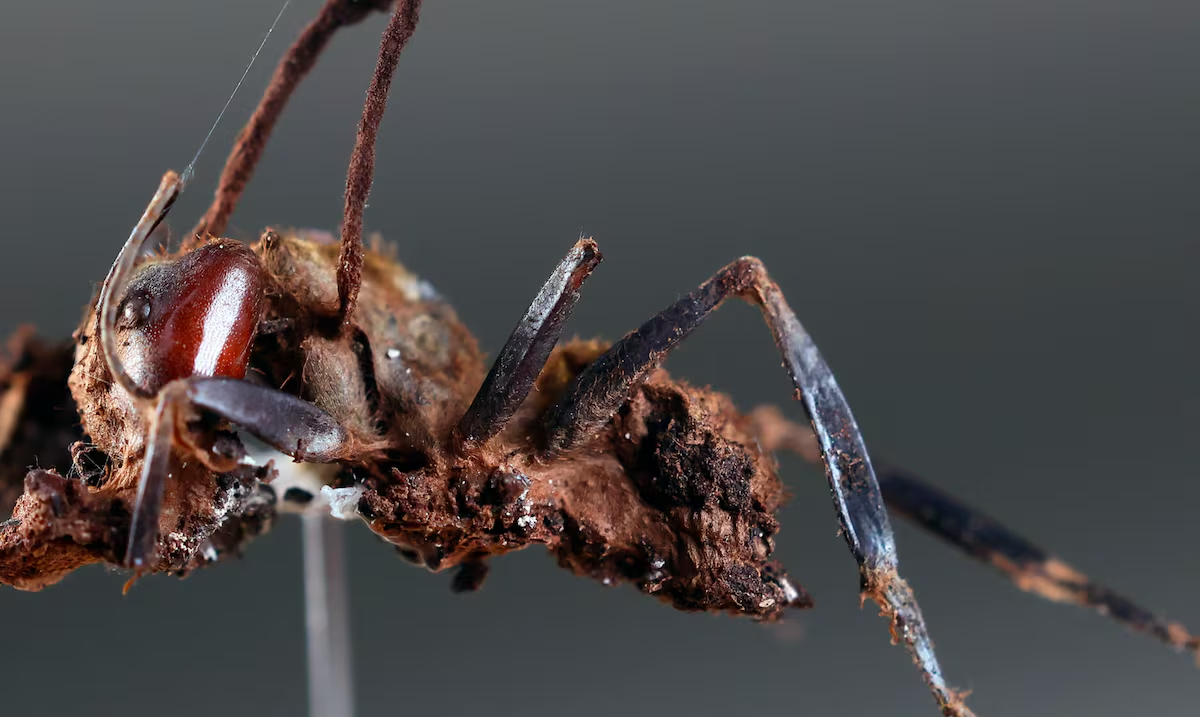
Guadalajara- Researchers discovered for the first time in Mexico six types of “zombie mushrooms” capable of infecting ants and manipulating their behavior until causing their death, one of them named in honor of the Mexican filmmaker Guillermo del Toro and his fascination with monstrous creatures.
This horror story is written in the tropical forests of Jalisco where the scientist from the University of GuadalajaraCésar Ballesterosdocumented the behavior of six species of fungi called ‘entomopathogens’ that infect ants and spiders until they take control of their behavior for about a year.
“When it enters the ant’s body, it begins to produce a substance, which are specialized metabolites that interact with the nervous system of the ants and modify their behavior and the fungus makes them walk erratically,” Ballesteros explained to EFE.
By taking control of the ant’s decisions, The fungus forces it to go to places that specialists call “cemeteries” with light and humidity conditions conducive to infecting other insects and taking advantage of the skeleton to ensure its own growth.
“They are a kind of cemeteries where ant corpses accumulate, and in that place the ant makes its last movement, which is to cling with its jaws and legs to the substrate, which is the bark of some trees, the leaves or the underside of rocks. Then, the ant dies and the fungus begins to develop,” he explained.
This natural process has been going on for hundreds of years and is the way in which cordyceps fungi ensure their survival and reproduction, he added.
The beauty in this process that seemed straight out of a horror movie made Ballesteros name one of the species of fungus “Ophiocordyceps deltoroi” in honor of Del Toro.
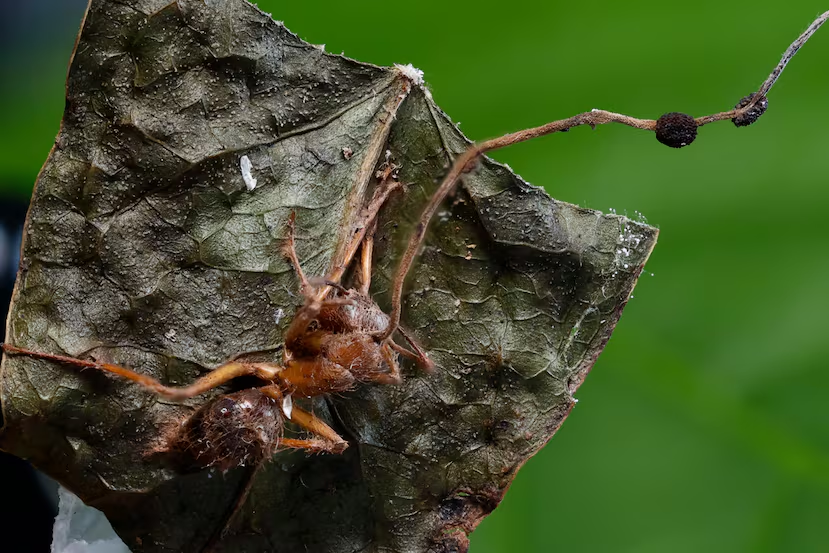
MEX368. GUADALAJARA (MEXICO), 08/14/2026.- Photograph showing an ant infected by the ‘Zombie Fungus’ (Ophiocordyceps unilateralis) this Thursday, at the University Center for Biological and Agricultural Sciences (CUCBA) of the University of Guadalajara in Jalisco (Mexico). Researchers discovered for the first time in Mexico six types of “zombie fungi” capable of infecting ants and manipulating their behavior until causing their death, one of them named in honor of the Mexican filmmaker Guillermo del Toro and his fascination with monstrous creatures. EFE/ Francisco Guasco(Francisco Guasco)
“Because he is from Jalisco, he is a graduate of the University of Guadalajara and for all the work he has done in cinema with the theme of horror and fantasy, what more than to dedicate to him a kind of mushroom that science calls a zombie, right? In addition, he resembles the characters he has created in his career,” explained the researcher.
The process of this type of parasitic zombie fungi is so particular and fascinating that the story of the video game and the subsequent television series “The last of us” is based on them, he noted.
“When that video game came out, another scientific article came out where it was already beginning to name how the fungi that produce cemeteries or that make ants undead began to be called zombie fungi, zombie ant fungi,” he said.
This discovery goes beyond the improbable and represents a milestone for Mexican science, since Ballesteros is the first to identify this species of the fungi kingdom in Mexico.
“There are very few specialized researchers. They are the first species to be described for Mexico, there was only one called ‘Mexican cordyceps’, which attacks butterflies. It was the only one described for Mexico and now we contribute this work where six species exclusive to Mexico are described,” he said.
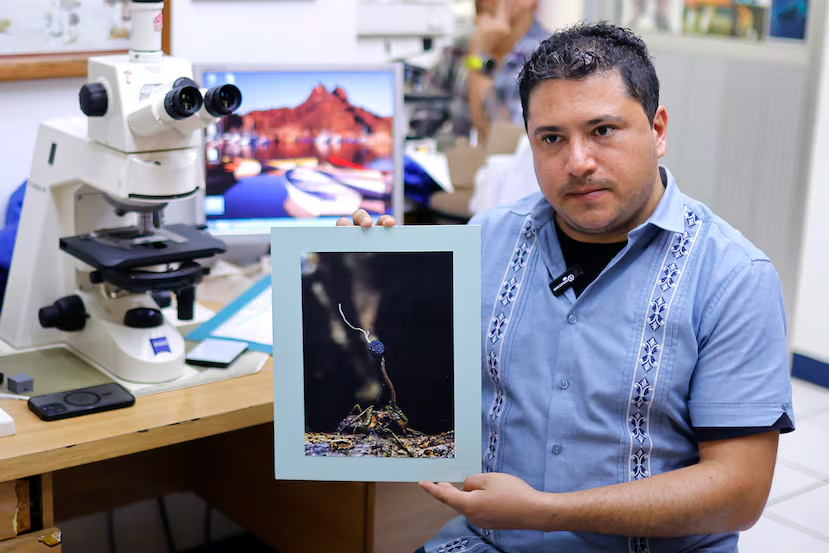
The science teacher, César Eduardo Ballesteros, shows a photograph of an ant infected by the “zombie fungus” (Ophiocordyceps unilateralis) this Thursday, at the University Center for Biological and Agricultural Sciences (CUCBA) of the University of Guadalajara in Jalisco (Mexico). (Francisco Guasco)
In addition to the ecological importance, these fungi could be studied to produce medicines for human benefit.
“Some of these fungi produce substances that can be used as medicines, for example, to counteract the effects of cancer, tuberculosis, multiple sclerosis, among other diseases. Much research needs to be done for the benefit of human beings,” he concluded.